English| EUR
Suggested for you
More currencies
Choose a language
The Karimunjawa archipelago protects 27 islands and over 90 coral species across 111,625 hectares of marine national park. Snorkeling here means navigating conservation-fee structures, boat-operator pricing, and gear-rental models that vary by island and departure point. This guide maps the actual costs you'll face.
Quick answer
All visitors to Karimunjawa National Park pay a 150,000 IDR conservation fee per person upon arrival at the pier, regardless of whether you snorkel. Boat operators typically charge 300,000–500,000 IDR per person for island-hopping snorkeling tours covering three to five sites, with mask and fin rentals adding 50,000–75,000 IDR if you don't bring your own. Private boat charters run 1,500,000–2,500,000 IDR per day depending on vessel size and season.
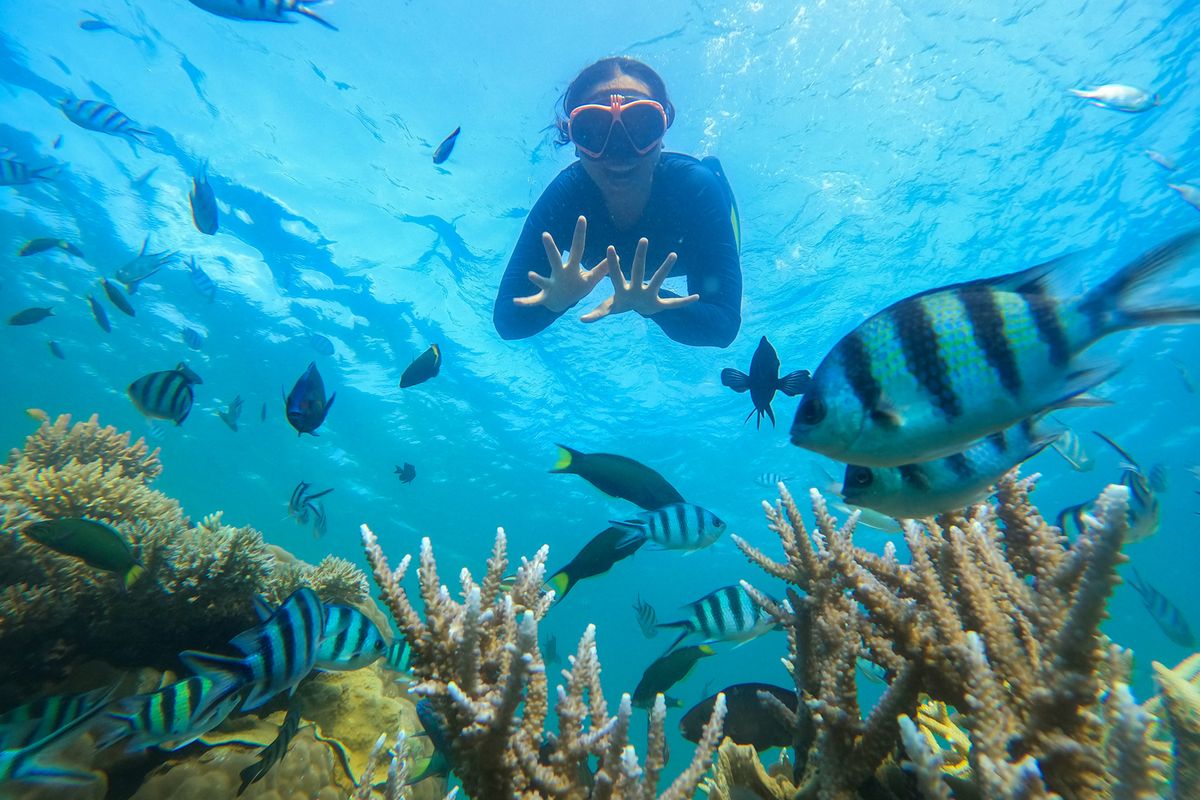
Karimunjawa's coral gardens sit in shallow water—most snorkeling sites range from two to six meters deep—which makes mask-and-fin access both straightforward and budget-flexible. The mandatory conservation fee funds reef monitoring, mooring-buoy maintenance, and ranger patrols across the marine park's five designated snorkeling zones. Operators depart from Karimunjawa village harbor between 08:00 and 09:00, returning by mid-afternoon before wind picks up. Understanding snorkeling Karimunjawa harga means separating fixed costs from variable ones. The conservation entry is non-negotiable and collected at the pier regardless of your activity. Boat costs depend on group size: joining a shared tour with six to twelve passengers keeps per-person rates low, while private charters make sense for groups of four or more who want flexible timing. Gear quality varies—budget operators provide basic masks that may leak, while higher-tier outfitters stock prescription masks and full-face snorkels. Most island-hopping routes include Menjangan Kecil for its turtle population, Cemara Besar for hard coral walls, and Tengah Island's seagrass beds where juvenile fish congregate. Operators anchor at each site for 30 to 45 minutes. Visibility peaks between April and October when plankton levels drop and currents settle. The park's zoning system prohibits snorkeling in core breeding areas near Kemujan Island, so tours concentrate on buffer zones with established mooring points. Payment structures reflect the island's cash economy. Few operators accept cards, and the nearest ATM sits in Karimunjawa village with sporadic uptime. Bringing sufficient rupiah eliminates the common problem of negotiating last-minute gear rentals or tipping crew with whatever bills remain. Prices hold fairly stable across operators because the boat association sets baseline rates, though haggling works for multi-day bookings or off-season visits when occupancy drops.
“The mandatory conservation fee funds reef monitoring, mooring-buoy maintenance, and ranger patrols across the marine park's five designated snorkeling zones.”
The best arrival window is 08:00–12:00 to ensure optimal lighting for snorkeling and calmer sea conditions before afternoon winds. Planning your visit during the transition seasons provides the most reliable visibility for underwater activities.
27–32°C, calm seas
Transitional weather offers high underwater visibility and lower wind speeds.
27–31°C, dry season
Dry weather conditions result in minimal rainfall and stable sea currents.
—
Arriving at 08:00 avoids afternoon wind shifts and provides better visibility for snorkeling sessions.
Verdict: The optimal slot is from April to May or September to October, arriving between 08:00 and 12:00 on weekdays.
Prepare these essentials before your snorkeling trip to ensure smooth entry and a comfortable experience.
Everything you need to know about snorkeling karimunjawa harga
Bring essential items such as sun protection, swimwear, a towel, and a waterproof bag for your belongings. Having your own snorkeling equipment can also enhance your comfort during the tour.